Walk the show floor at NVIDIA GTC long enough and a pattern emerges: the booths get bigger, the demos get louder, and somewhere between the humanoid robots and the sovereign AI announcements, it's easy to miss the quieter story happening in the corners. That's usually where the most interesting things are.
This year, one of those corners belonged to Taiwan — and it was making noise of its own.
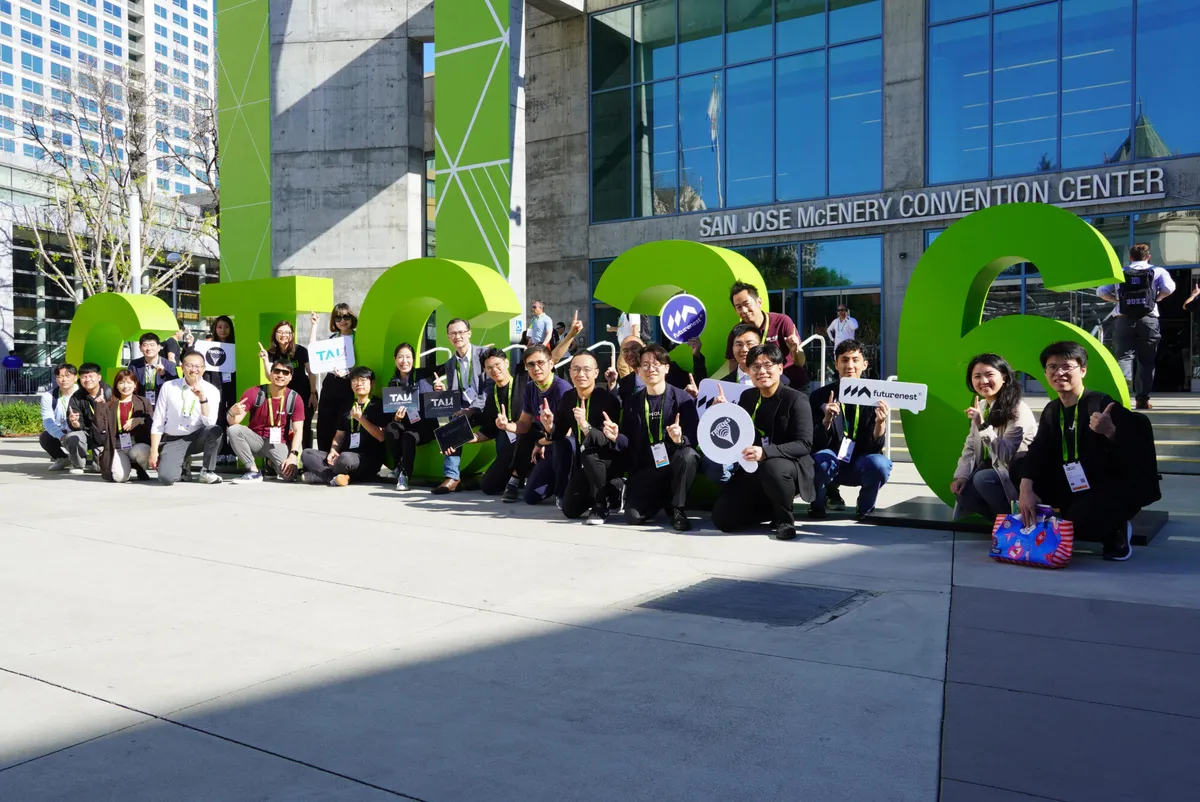
Thirteen Taiwanese AI startups descended on San Jose last week under the banner of Startup Island TAIWAN, the government-backed national startup brand, and the TAI1 AI Accelerator, a joint initiative between StarFab and NVIDIA's Inception program. The lineup read like a deliberate rebuttal to the world's most stubborn assumption about the island: that Taiwan's role in the global tech stack begins and ends with the silicon it manufactures. The startups on display were not selling chips. They were selling what runs on top of them.
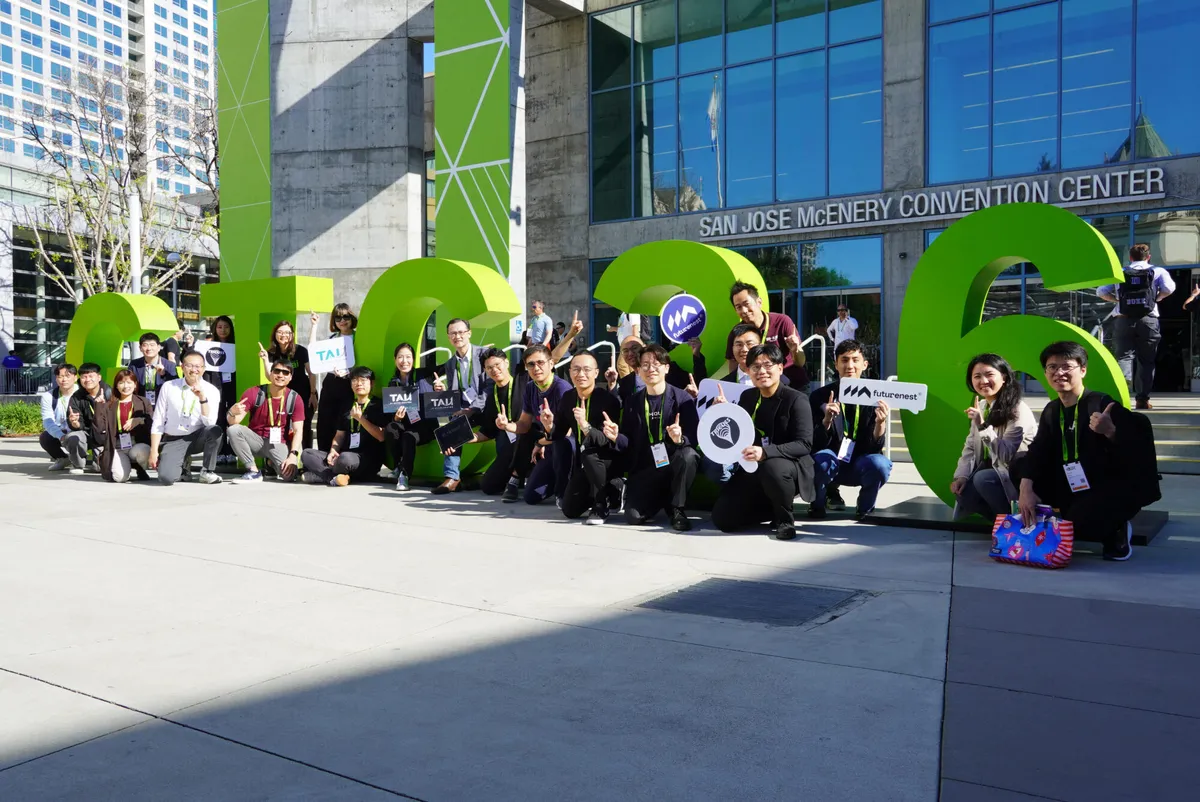
Thirteen Taiwanese AI startups descended on San Jose last week under the banner of Startup Island TAIWAN and the TAI1 AI Accelerator.Image Credits: Meet Startups
"Taiwan makes the chips" is, of course, one of the most load-bearing sentences in modern geopolitics. TSMC's dominance has made the island a perpetual flashpoint in supply chain anxiety and great-power rivalry. It has also, somewhat unfairly, flattened the world's perception of what Taiwan actually produces. GTC 2026 was, among other things, a 13-company argument that the flattening needs to stop.
The range of what the cohort brought to San Jose was striking. DeepRad AI is using AI to analyze low-dose CT scans for early detection of cardiopulmonary and neurodegenerative diseases — the kind of application that sits at the highest-stakes intersection of AI and healthcare. Virphysio is building clinical decision-support tools using digital twins and AI, designed to simulate high-risk invasive procedures before a surgeon ever picks up a scalpel.
Holon Robotics is translating decades of complex manufacturing know-how into an AI Agent purpose-built for metalworking. MetAI is developing a digital twin simulation platform for industrial and physical AI environments. NunoX is creating digital twin models of textiles using high-precision fabric scanning and AI simulation — the kind of unglamorous, high-value infrastructure play that rarely makes headlines but quietly becomes indispensable.
And then there is Yo-Kai Express, which brought a smart bubble tea robot to the show floor and, by all accounts, stole an unreasonable number of scenes.
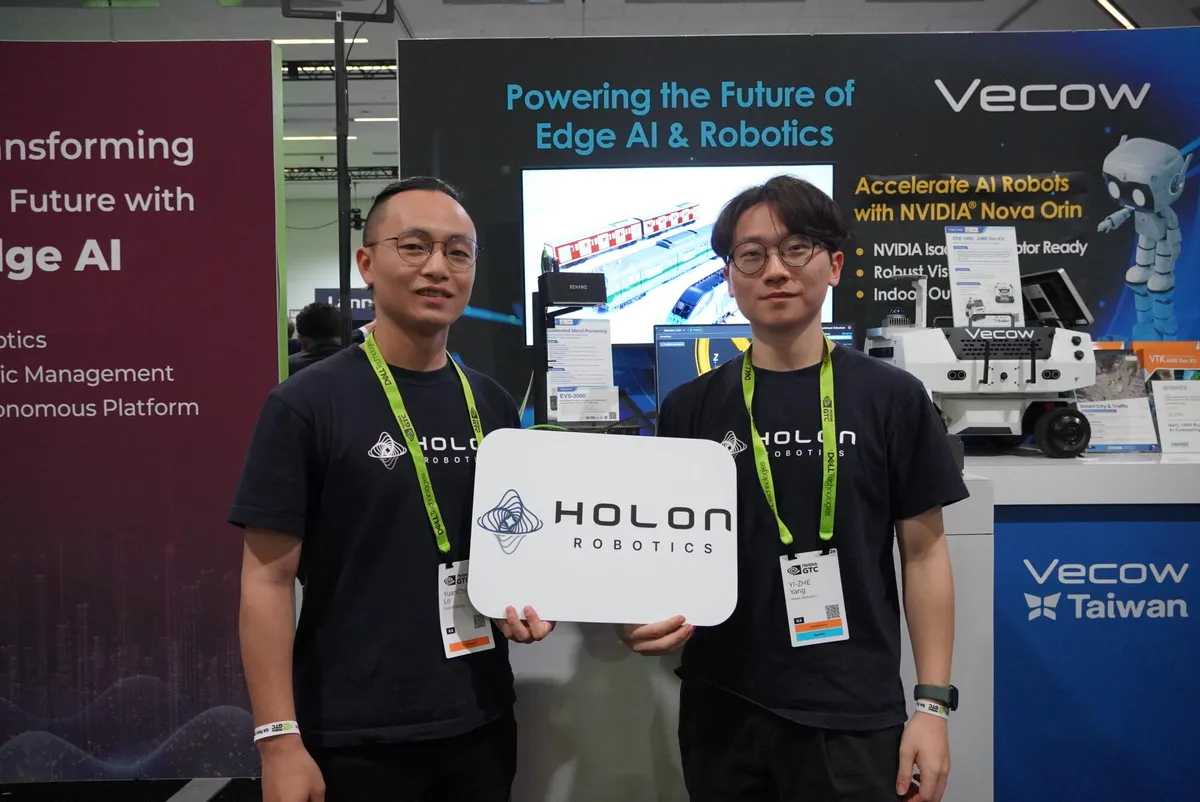
Holon Robotics is translating decades of complex manufacturing know-how into an AI Agent purpose-built for metalworking.Image Credits: Meet Startups
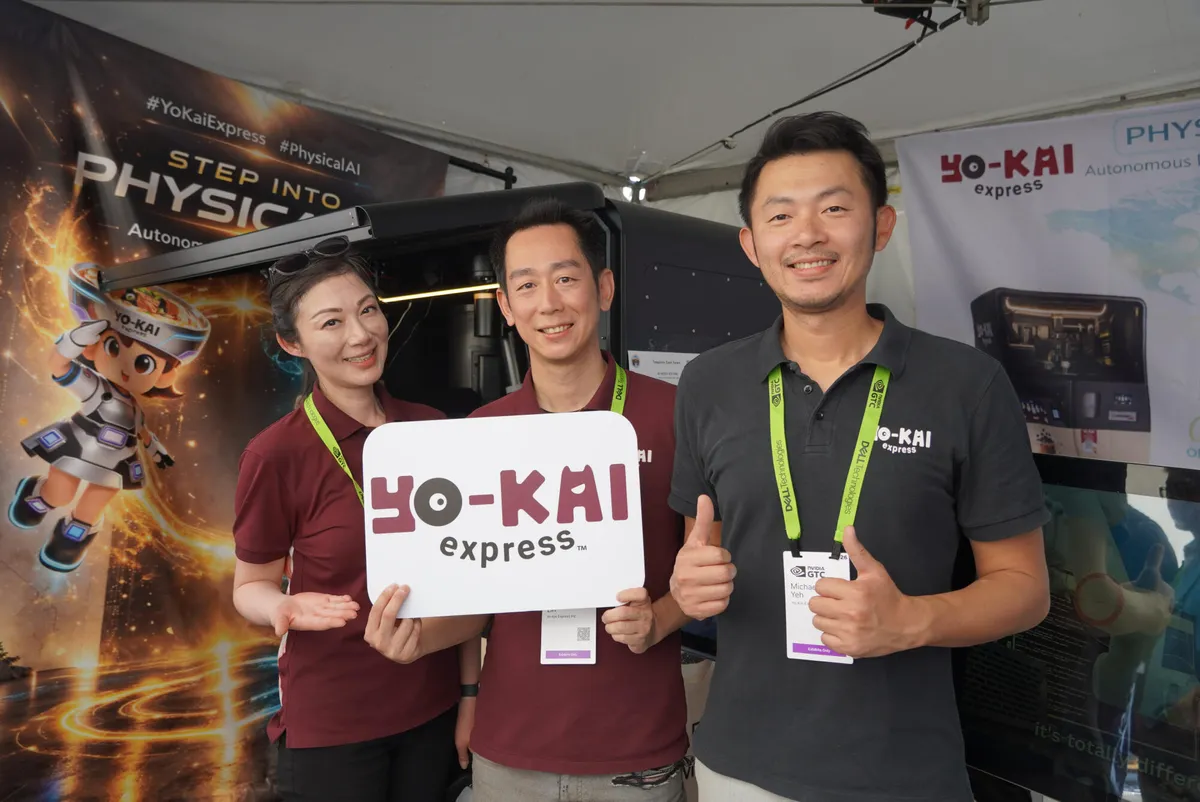
Yo-Kai Express, which brought a smart bubble tea robot to the show floor and stole an unreasonable number of scenes.Image Credits: Meet Startups
The breadth matters. It is one thing for a national startup ecosystem to produce a cluster of companies in a single vertical — that's focus, or perhaps just luck. It is another to demonstrate range across medical AI, robotics, smart manufacturing, sustainability tech, consumer applications, and enterprise software simultaneously. Range suggests depth of talent and, crucially, the presence of a maturing ecosystem rather than a few isolated bets.
Several teams exhibited alongside major Taiwanese hardware players including Asus, Axiomtek, and Adlink — a pairing that was almost certainly not accidental.
It was a quiet demonstration of the full-stack ambition: here is the hardware, here is the software, here is what happens when they are built to work together from the ground up.
Six of the thirteen startups — DeepRad AI, Fortune AI, Holon Robotics, Morale AI, Virphysio, and the AR/VR/blockchain-meets-enterprise-gamification company known in Chinese as 愛吠的狗 — earned spots in GTC's Poster Gallery, the conference's most academically rigorous showcase.
The Poster Gallery is not a participation award. Acceptance signals peer-level technical credibility in a room full of researchers and engineers who can tell the difference. Six entries from a single national cohort, in a single year, is a number that should register.
The commercial intent was equally visible. Futurenest, which is building what it describes as an enterprise-grade ChatGPT, came to GTC specifically to establish relationships with global distributors and major telecom operators. Avalanche Computing, targeting high-compliance industries like advanced manufacturing and pharmaceuticals, reached preliminary agreements with distributors in New York and is building out its sales and after-sales infrastructure across the U.S. market.
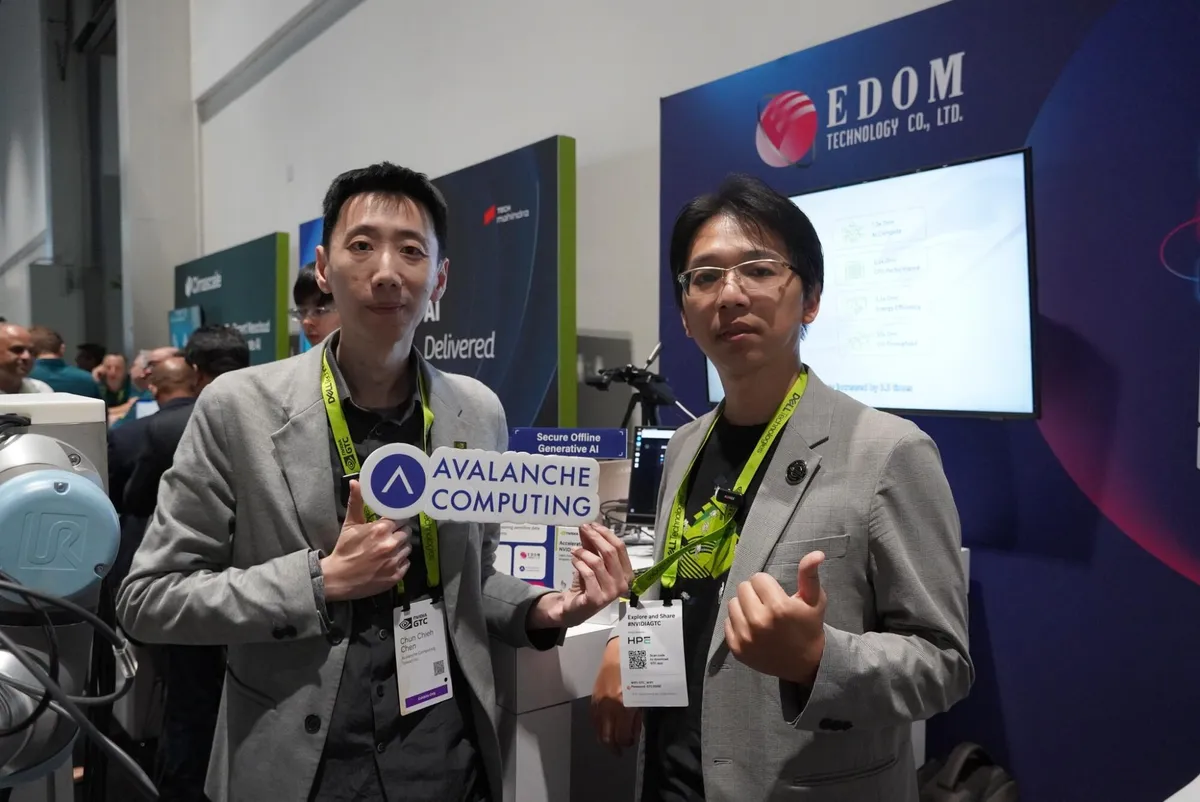
Avalanche Computing is building out its sales and after-sales infrastructure across the U.S. market.Image Credits: Startup Island Taiwan
NunoX's founder Jac Hsieh was direct about his calculus: the American market's scale is the opportunity, and the company connected with a U.S.-based firm during the conference that it is now exploring as a potential partnership for market expansion. Linker Vision, which deployed 30,000 smart cameras across Kaohsiung in a flagship smart city project, is using GTC as the launchpad to take that digital twin and visual AI platform international.
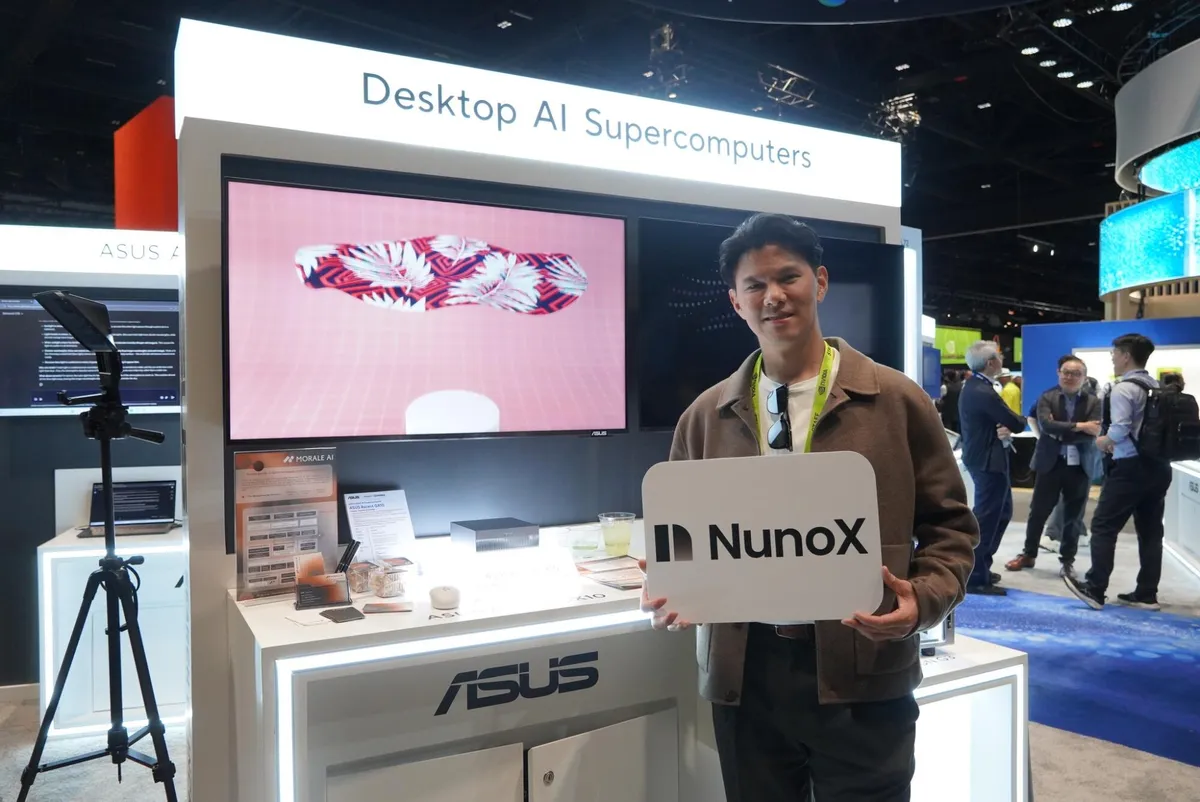
NunoX's founder Jac Hsieh connected with a U.S.-based firm during the conference that it is now exploring as a potential partnership for market expansion.Image Credits: Startup Island Taiwan
For Holon Robotics co-founder Yuan-Chieh Lo, who describes himself as a "robotics fanatic," GTC was less a conference than an industry feast. He left with connections to physical AI partners across the Asia-Pacific region and introductions to multiple Silicon Valley venture capitalists — the kind of meeting density that would take months to replicate through conventional outreach.
Taiwan has spent decades perfecting the art of making the things that make everything else possible.
The argument its startups were quietly making at GTC 2026 is that the island is now ready to make everything else, too. The chips will keep coming. But increasingly, so will the code, the robots, the clinical AI, and yes, apparently, the bubble tea.
Whether the global market is ready to update its mental model of Taiwan is another question. If the last week was any indication, Taiwan isn't waiting for permission to find out.

 Top
Top