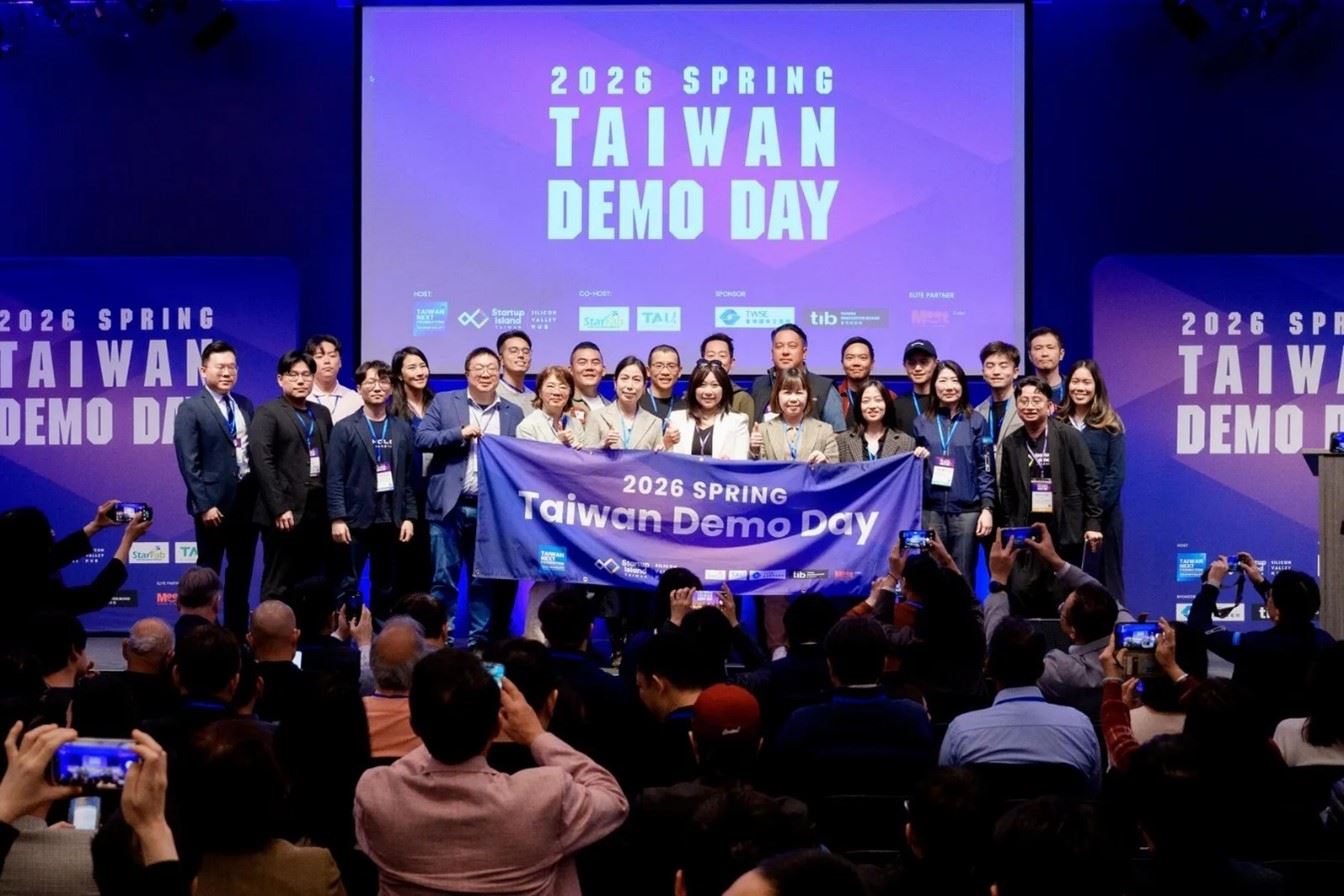
As the world gathers in Silicon Valley for NVIDIA GTC, often described as the “Olympics of the AI supply chain”, Taiwan’s startup ecosystem is stepping into a global spotlight to showcase its strength in both hardware and software innovation.
On the eve of GTC, the Taiwan Demo Day 2026 Spring Session brought together nearly 1,000 attendees, including founders, investors, and industry leaders from Taiwan and the United States. The event highlights Taiwan’s growing influence as AI evolves from cloud-based systems into real-world applications.
Co-hosted by TaiwanNext Foundation and Startup Island TAIWAN (Silicon Valley Hub), with support from StarFab Accelerator and the Taiwan Stock Exchange, the event took place at the Computer History Museum, a landmark venue in the global tech ecosystem.
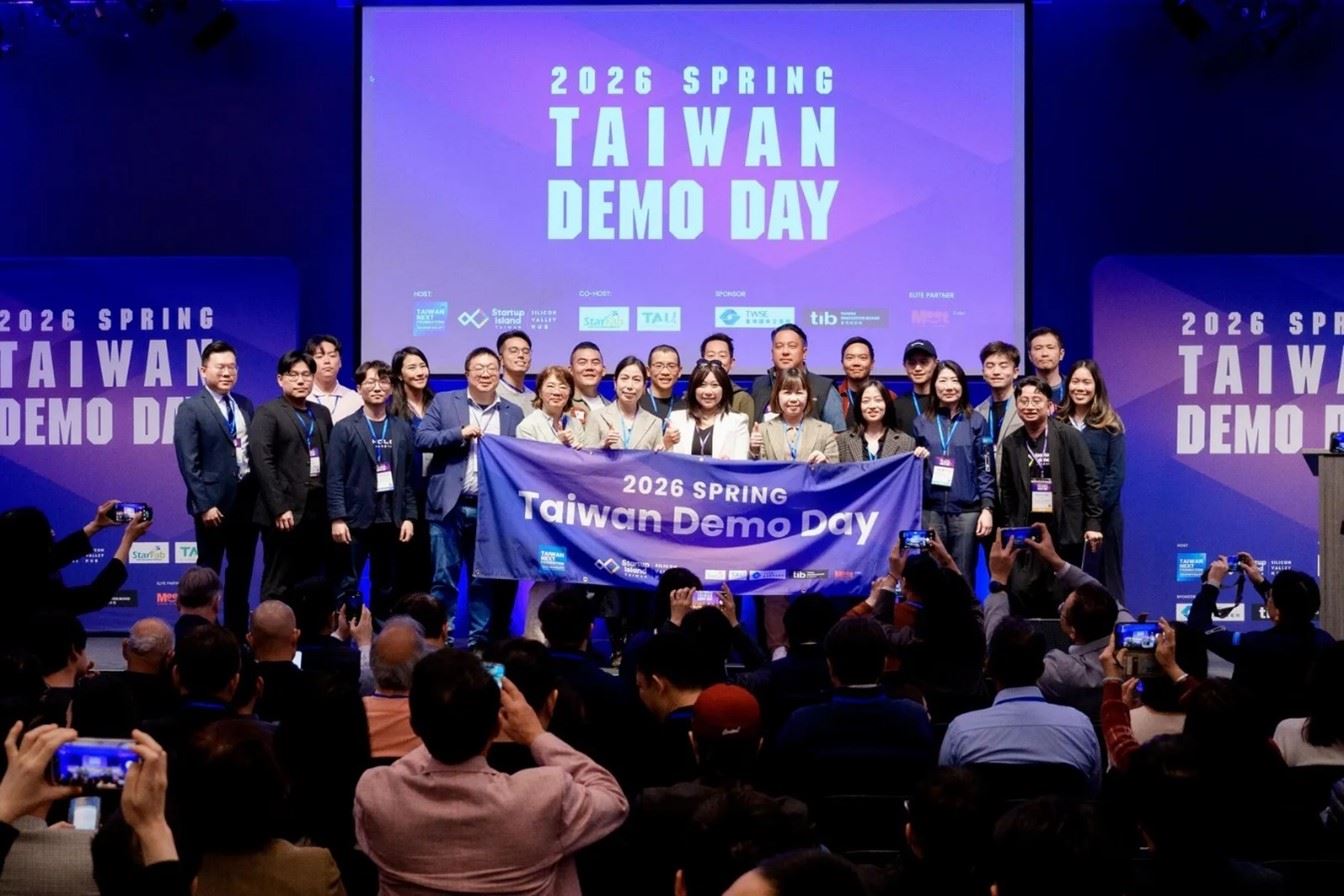
Organizers of Taiwan Demo Day 2026 Spring Session, including TaiwanNext Foundation and Startup Island Taiwan SV Hub, together with supporting partner StarFab Accelerator, pose for a group photo with participating startups.Image Credits: Taiwan Demo Day
At its core, Taiwan Demo Day is about connection.
Katie Hsieh, founder of TaiwanNext Foundation, said the mission is to “break barriers across geography, generations, and industries”, ensuring Taiwan’s startup ecosystem remains globally connected and competitive.
Referencing the 1994 book Regional Advantage, Uly Su, Deputy Director of Startup Island TAIWAN’s Silicon Valley Hub, noted that Silicon Valley’s long-term success is rooted in open innovation and a culture of sharing. Today’s Taiwanese founders are following a similar trajectory to earlier ecosystems in Israel and India. They absorb innovation in Silicon Valley while connecting it to Taiwan’s highly specialized hardware supply chain.
This complementary relationship has made Startup Island TAIWAN’s Silicon Valley Hub a key support system for Taiwanese startups entering the US market, helping them build networks, access resources, and deepen cross-border collaboration.
At the same time, Liu Yan-rong, chairperson of StarFab, highlighted how the TAI1 AI accelerator turns this vision into practice. By combining the resources of the NVIDIA Inception Program with Taiwan’s industry expertise, the program enables AI to move into manufacturing, healthcare, and robotics applications.
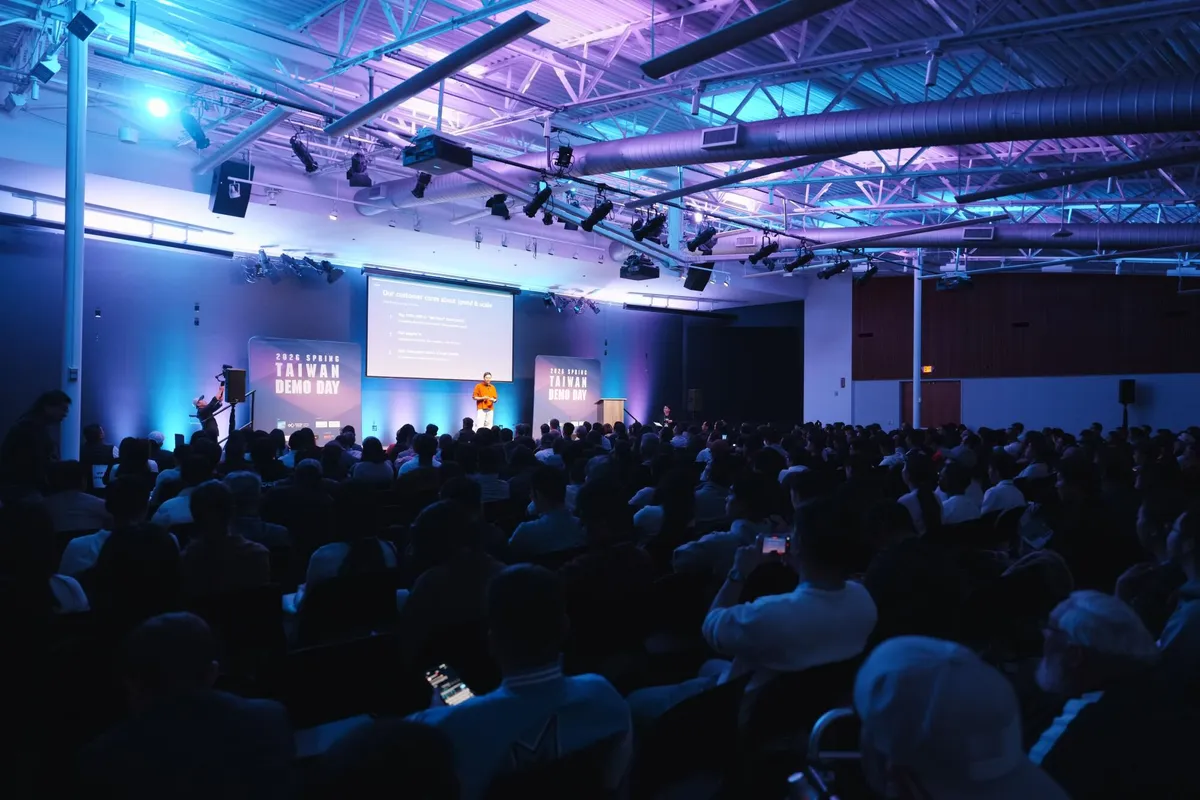
Taiwan Demo Day 2026 Spring Session kicked off in Silicon Valley, drawing nearly 1,000 attendees to the event.Image Credits: Taiwan Demo Day
Technology and vision are only the starting point. Long-term success depends on access to capital.
According to Tian Jian-zhong, Taiwan’s market capitalization reached 3.9 trillion US dollars by early 2026, making it the seventh largest market globally. Despite a smaller population, the market maintains an average daily trading value of 26.9 billion US dollars, reflecting strong liquidity.
He also pointed to the Taiwan Innovation Board as a strategic platform for startups and SMEs. Unlike many global exchanges that focus on large companies, Taiwan’s market sees 26% of trading volume coming from smaller firms. This structure allows startups to access not only IPO funding but also sustained capital through secondary offerings.
For founders, this suggests that choosing a market with strong liquidity and long-term funding mechanisms may be more important than simply targeting the largest exchange.
The 12 selected startups reflect a broader shift in AI toward systems that can perceive, decide, and act in the physical world.
In robotics and automation, Yo-Kai Express is deploying AI-powered cooking robots globally. Red Bot Intelligence is applying Hollywood animation expertise to improve motion capture and visual realism in humanoid robotics.
In healthcare, CancerFree Biotech is digitizing lab workflows using AI and smart glasses. DeepRad AI is advancing early detection of cardiopulmonary and neurodegenerative diseases through low-dose CT analysis.
Agentic AI also plays a major role. 3drens focuses on fleet optimization and decision systems. Tricuss is developing AI agents that significantly reduce research and development timelines. InsForge is building infrastructure for automated coding agents. APAL is focused on secure communication between AI agents. Holon Robotics applies AI agents in heavy industries such as metal processing.
In other sectors, DAHUA AI is building personalized language learning platforms. Fortune AI uses edge computing to detect drowning risks in real time in open water environments.
Clarq AI, founded by an MIT PhD and a professional fitness trainer, has developed digital resistance training systems already used in high-intensity training for Taiwan Air Force pilots. The company represents a new intersection of fitness, defense, and AI technology.
The event also brought together leading Silicon Valley investors and experts, including Charles Huang, Karen Yu, Pauline Tsai, Ting Louie, and Scott Chen.
Karen Yu noted that while Silicon Valley continues to focus heavily on software, Taiwan’s strength in integrating hardware and software will play a critical role in the next phase of AI development.
Charles Huang described Silicon Valley as the “NBA of entrepreneurship”, a place where the world’s best compete for capital. He pointed out that Taiwanese teams have achieved strong technical results despite limited resources, describing it as a case of doing more with less.
He also emphasized that success in Silicon Valley requires adapting to faster fundraising cycles and actively participating in local networks, rather than focusing only on product development.

 Top
Top