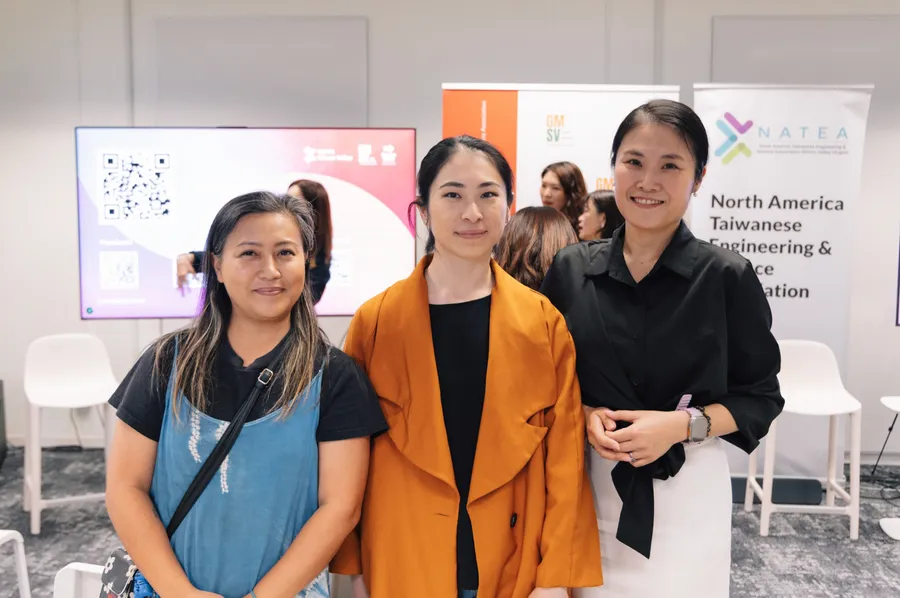
The room at Palo Alto filled up the way these things usually don't: without awkward silences, without people staring at their phones, without the low-grade social anxiety that tends to hover over professional networking events like bad Wi-Fi. People were actually talking to each other. Not performing conversation — talking.
That, according to Jenny Lin, was precisely the point.
"When you're in the same room, what a speaker shares doesn't just transfer as information," said Lin, president of NATEA Silicon Valley, the North America Taiwanese Engineering & Science Association's Bay Area chapter, in her opening remarks. "It transforms into energy."
On March 28th, NATEA Silicon Valley held its sixth annual Women's Summit — and for the first time in the event's history, it did so with bodies in chairs. After years of Zoom grids and muted microphones, the organization went hybrid: live at the Startup Island TAIWAN Silicon Valley Hub in Palo Alto, streamed online, and deliberately designed to remind attendees what it feels like when a room full of people decide, collectively, to take up space.
In Silicon Valley, that act is more loaded than it sounds — especially if you're a Taiwanese woman.
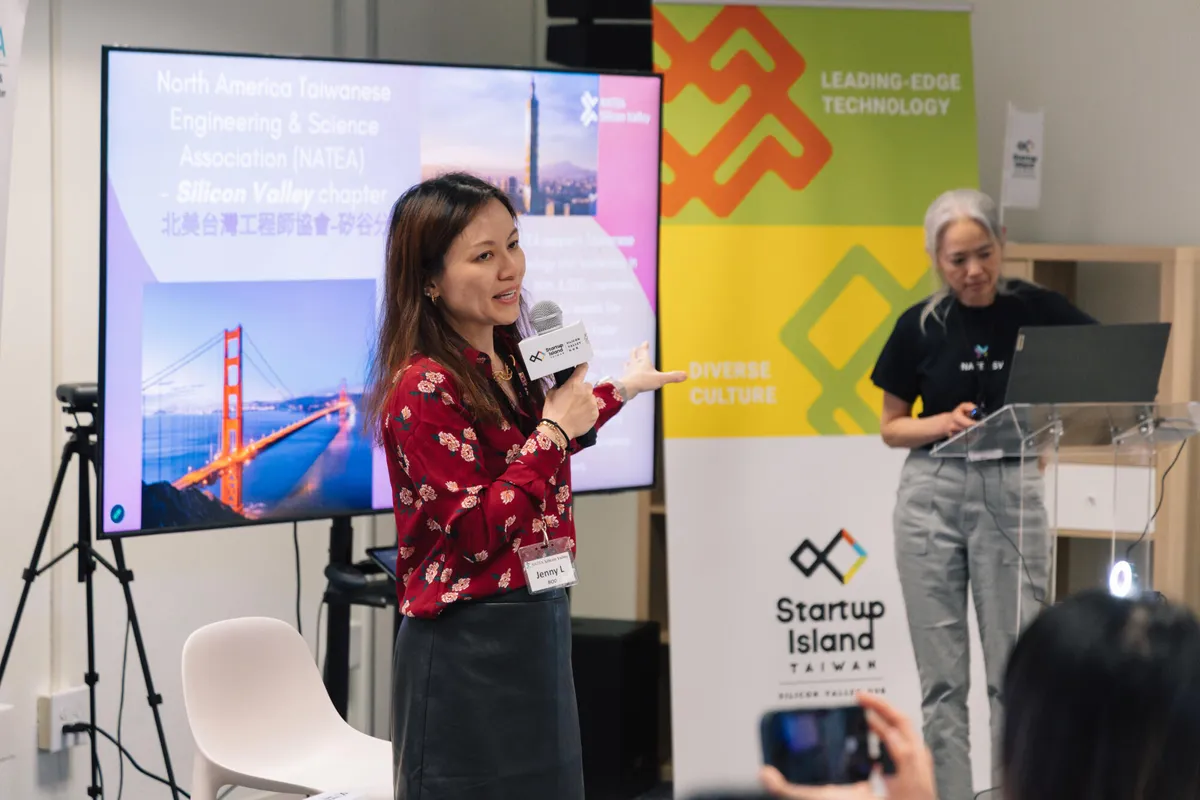
Jenny Lin, President of the NATEA Silicon Valley Chapter, delivering the opening remarks.Image Credits: NATEA
The data on Asian women in tech leadership has been stubbornly discouraging for years. They are well-represented in the engineering pipeline, consistently underrepresented in the C-suite, and almost entirely absent from the founding stories that get told and retold in the press. The phenomenon even has a name — the "bamboo ceiling" — though naming it has done little to dismantle it. What tends to dismantle it, if anything does, is community: the slow, unglamorous work of building networks dense enough to hold people up when institutional structures won't.
That's what NATEA has been quietly doing for years. And this year's Women's Summit — themed "Lead with an Entrepreneurial Mindset" — was its most visible statement yet.
The five speakers the organization brought to Palo Alto didn't look like a typical Silicon Valley panel. There was no parade of VP titles or Series B announcements. Instead: a fine-dining restaurateur, a textile artist who makes indigo-dyed scarves by hand, a financial planner who used to work in aviation, an engineer-turned-startup-consultant, and a leadership coach who speaks primarily to immigrants. What they had in common wasn't a résumé archetype. It was a disposition — the refusal to wait for conditions to be ideal before moving forward.
Chanile Chang, who leads the Alexander's Steakhouse group, one of Silicon Valley's more recognizable high-end dining brands, gave what she described as her first-ever public speech. She could have leaned into the prestige of the title. She didn't.
"Don't romanticize it," she told the audience, with the bluntness of someone who has spent years managing kitchens under pressure. The hospitality industry, she noted, runs on relationships and grit far more than on grand strategy — and the thing she's most proud of isn't revenue or press coverage, but a team that functions like a family. "Stop waiting until everything is ready. Believe in yourself, find a way to create joy, and just do it."
The room received this the way rooms receive things that are true: quietly, and with nodding.
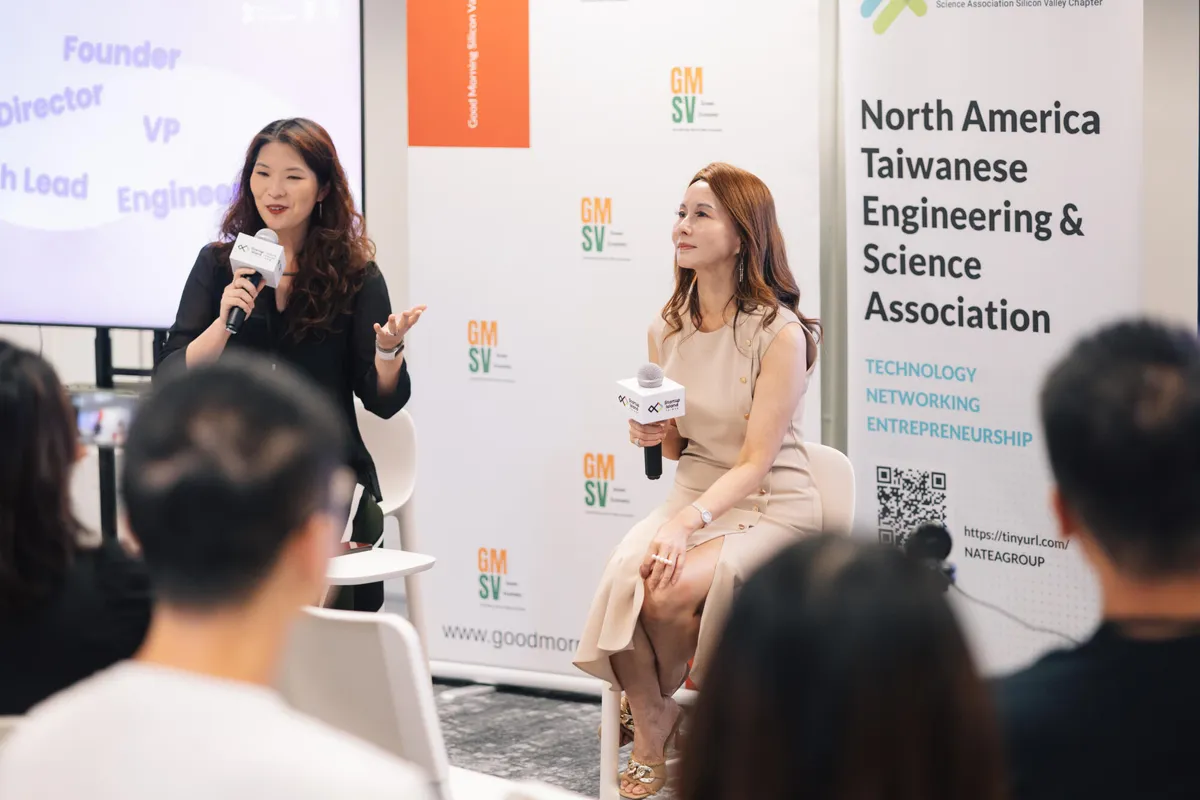
Chanile Chang, leader of the Alexander’s Steakhouse Group, delivered her first-ever public speech.Image Credits: NATEA
Nina Chen's path to the same stage was considerably more winding. The founder of Dream Fields Indigo learned traditional indigo dyeing in Taiwan, then carried the craft to the Bay Area farmers' market circuit, one handmade scarf at a time. At one point, she recounted, she spent three months producing 500 scarves to fulfill a single order. Before that, she had worked as a promoter at a Taiwanese restaurant — jobs that, by conventional résumé logic, have nothing to do with building a textile brand. By her own logic, they had everything to do with it.
"Don't wait for opportunity to find you," she said. "When you start to shine, people will see you."
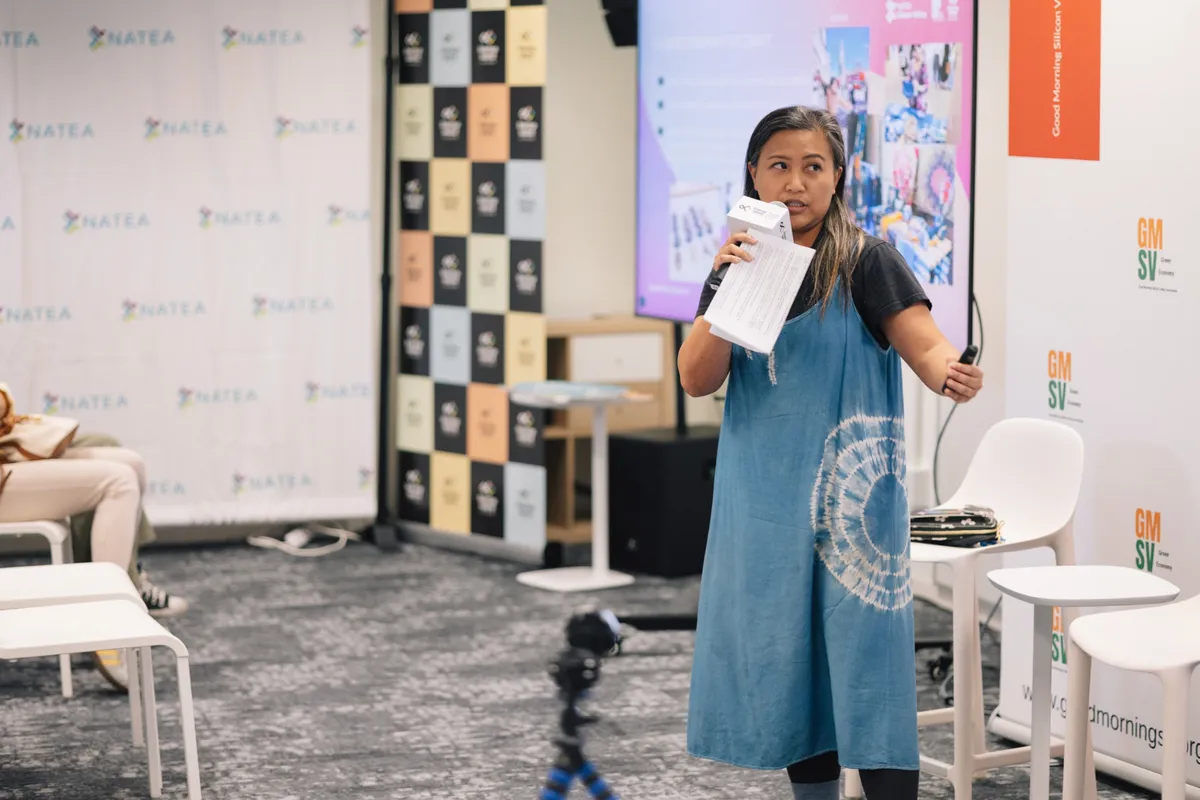
Nina Chen is sharing her entrepreneurial journey.Image Credits: NATEA
The summit's most structurally provocative talk may have come from Yi-Ning Huang, a former engineer who joined via livestream from outside the Bay Area. Her pitch was essentially an argument against the organizing fiction of most corporate career advice: that your title is a proxy for your value.
"I'm a nobody," she said — and then, without pausing for effect, added: "But I can help you turn your expertise into a business."
It landed somewhere between a joke and a thesis statement. Huang's point, unpacked, was that the professional identity most tech workers have been trained to perform — defined by employer, level, and org chart position — is a cage masquerading as a credential. The alternative she practices and teaches is a consulting and education model built around transferable expertise, not institutional affiliation.
Snow Ho made a similar argument through a more personal lens. Her career arc — aviation industry, dessert startup, financial planning — is the kind that résumé screeners are trained to penalize and hiring managers are trained to distrust. She's reframed it as a feature. "There is no map," she said. "You are the CEO of your own life." What she offers clients now, she explained, is essentially what she had to build for herself: a support structure that makes reinvention survivable.
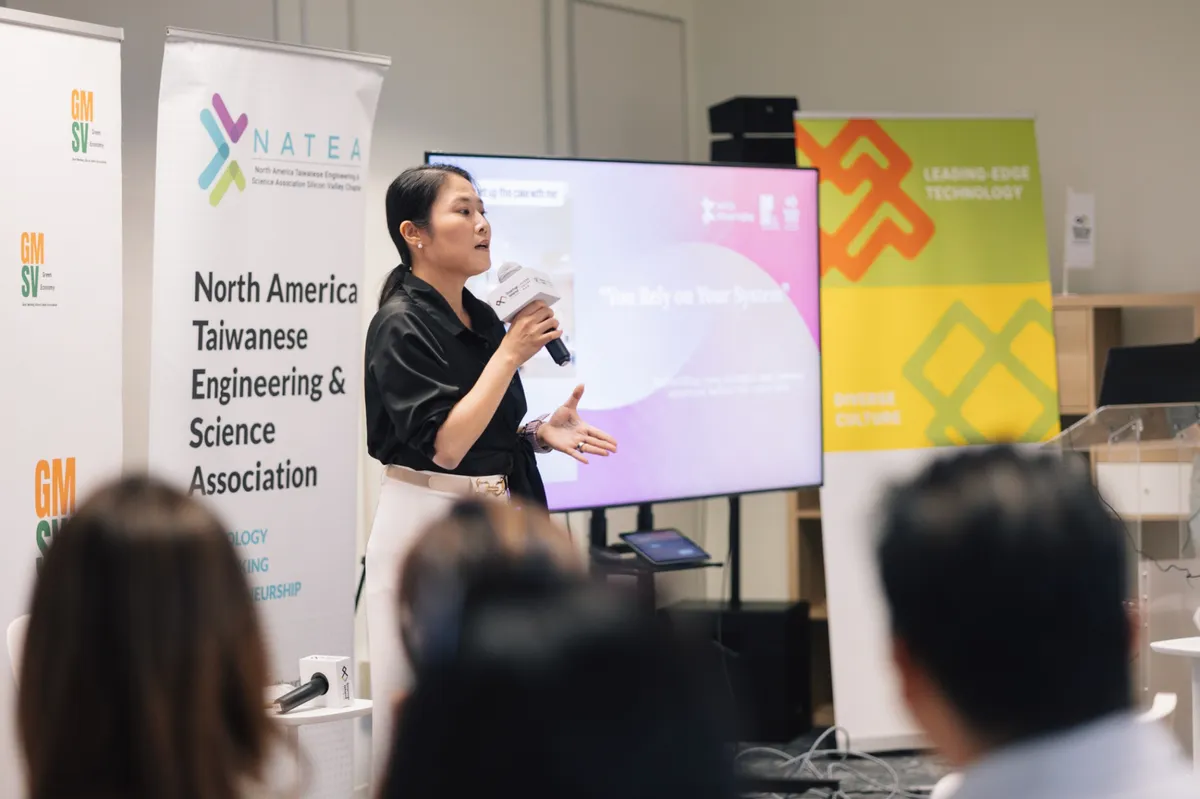
Life has no map; you are your own CEO." — Snow HoImage Credits: NATEA
The most intimate talk of the afternoon belonged to Nina Tseng, a leadership coach who works primarily with Asian women and immigrants — a demographic she knows from the inside. Where the other speakers delivered hard-won lessons, Tseng asked questions. She described her approach through a metaphor of roses, thorns, and buds: the beautiful, the painful, and the not-yet-opened. Her goal, she said, isn't to hand people answers but to help them locate the confidence they already have, buried under years of being told that taking up space is impolite.
"I don't give advice," she said. "I encourage people to find their own answers — because I want everyone to have confidence that comes from within."
In a summit full of women who had, in one way or another, learned to stop asking for permission, it was a fitting note to close on.
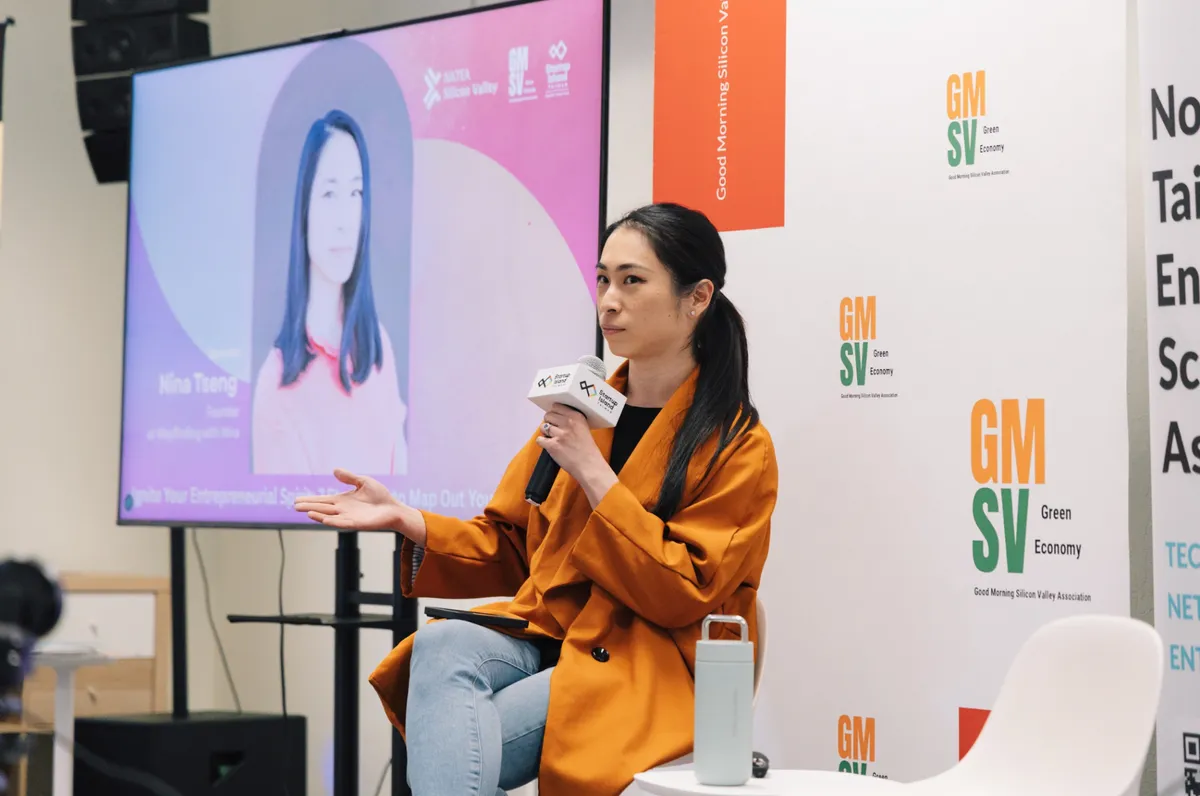
Leadership coach Nina Tseng focused her session on Asian women and the immigrant community.Image Credits: NATEA
NATEA Silicon Valley has been running the Women's Summit since 2020, always online, always functional, never quite like this. The decision to go in-person for the sixth edition was, Lin suggested, less about logistics and more about a theory of change: that the kind of support these women were offering each other — the kind that actually rewires how you think about your career — requires physical proximity to fully transmit.
Whether or not you buy the neuroscience, the anecdotal evidence was hard to argue with. After the formal program ended, the conversations didn't. People lingered. Business cards changed hands. Someone started a group chat. The awkward silences never materialized.
Six years in, Taiwan's women in Silicon Valley aren't waiting for the climate to change. They've decided to become it.

 Top
Top