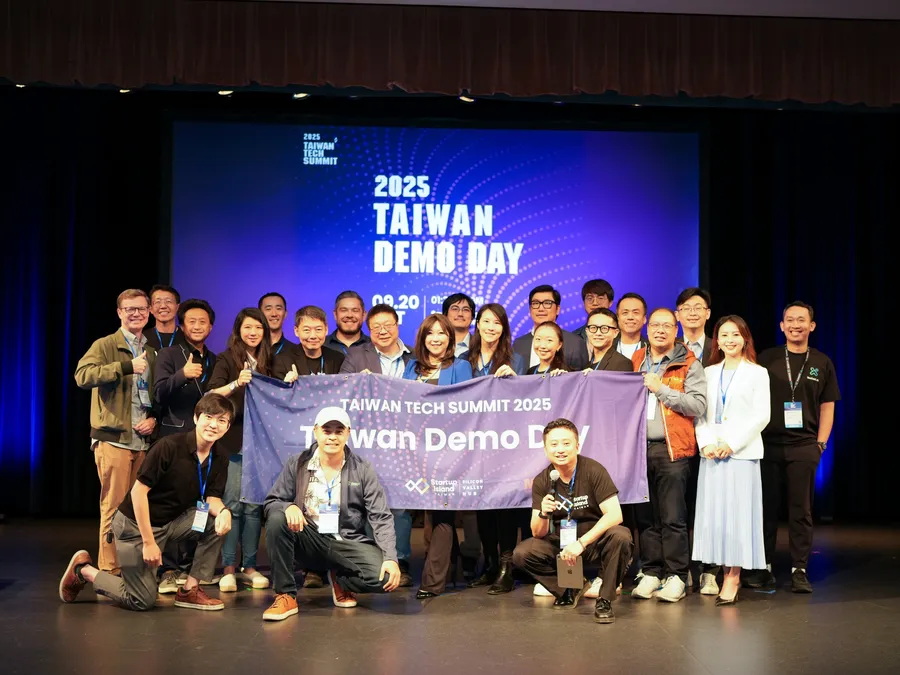
The 2025 North America Taiwan Tech Summit, organized by the Silicon Valley-based nonprofit Taiwan Next Foundation, kicked off on September 20 at the Santa Clara Convention Center.
This year’s summit centers on the theme “CONNECT • INNOVATE • INVEST,” bringing together industry leaders, investors, and top talent to highlight the innovative strength of the Taiwan-U.S. technology ecosystem. One of the main highlights was the Taiwan Demo Day, jointly hosted by Taiwan Next and Startup Island Taiwan’s Silicon Valley Hub, with support from Taiwan’s National Development Council. The event focused on four major fields: Agentic AI, AI Applications, Physical AI, and Bio/Medical AI.
The event drew more than 800 attendees, including over 150 professional investors from Silicon Valley. To provide valuable feedback to startups presenting at Taiwan Demo Day, five investment experts were invited as judges: Tiffine Wang, CEO of Onsen Global; Norman Liang, Partner at Upshot Venture; serial entrepreneur and angel investor Terry Hsiao; Laurent Rains, Director at Alchemist Accelerator; and Brandon Chiang, Managing Director at NTU Alumni Venture Capital.
A total of nine startup teams took the stage at the Demo Day. Each team had at least one co-founder with a Taiwanese background, or operated in a field closely tied to Taiwan’s industries. The selected teams represented a diverse mix of successful repeat founders, as well as current and former Y Combinator startups, showcasing a wealth of experience and backgrounds.
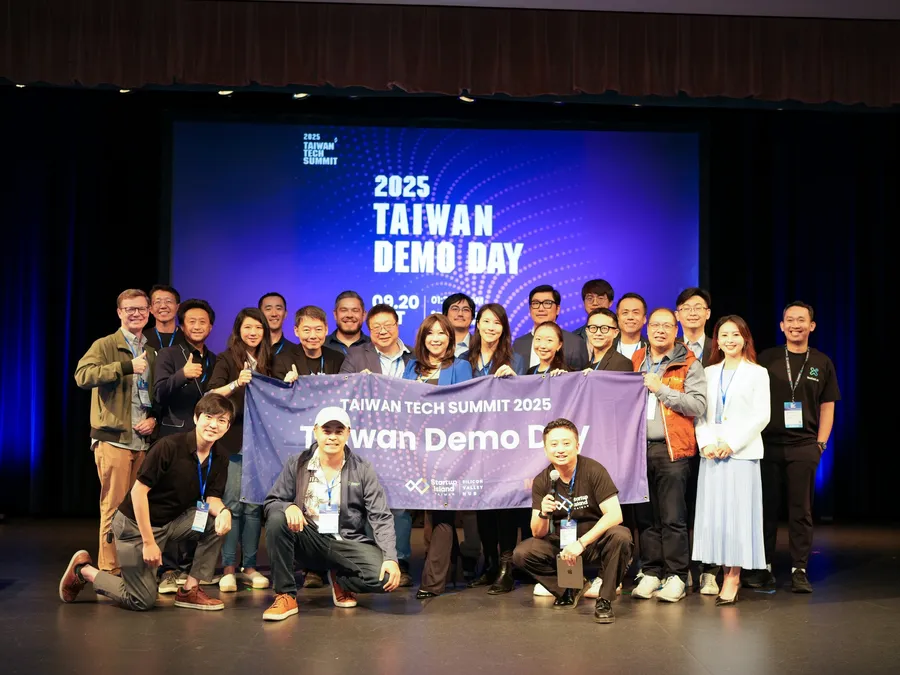
Startup teams, investor judges, and organizers gathered at Taiwan Demo Day.Image Credits: Taiwan Next
Founded in 2017, APMIC is one of the pioneering teams in Taiwan to focus on large language models and enterprise-grade private AI solutions. The company specializes in helping businesses quickly build intelligent knowledge systems, enabling secure data usage—all without the need for coding.
Headquartered in Taiwan, APMIC’s global expansion is led by Ian Chen, General Manager of APMIC USA. The team has observed that enterprise AI adoption is still in its early stages, with only about 40% of Fortune 500 companies deploying AI at scale. The main challenges include unclear ROI, high GPU costs, privacy compliance, and data sovereignty.
APMIC addresses these issues with its PrivStation product suite, which features medium-sized language models, a knowledge management platform that can run directly on private clouds or data centers, as well as APIs and custom fine-tuning services. Their self-developed ACE-1 model boasts 24 billion parameters and is optimized for Traditional Chinese. In testing, it has even outperformed Meta’s Llama series. APMIC believes that smaller language models can address more than 70% of enterprise scenarios while ensuring data security and privacy.
Last year, the company generated about $2 million in revenue, and this year that number is expected to grow to $3.5 million. Next, the team plans to take the experience they’ve gained serving Taiwan’s manufacturing sector to the global stage—especially the United States.
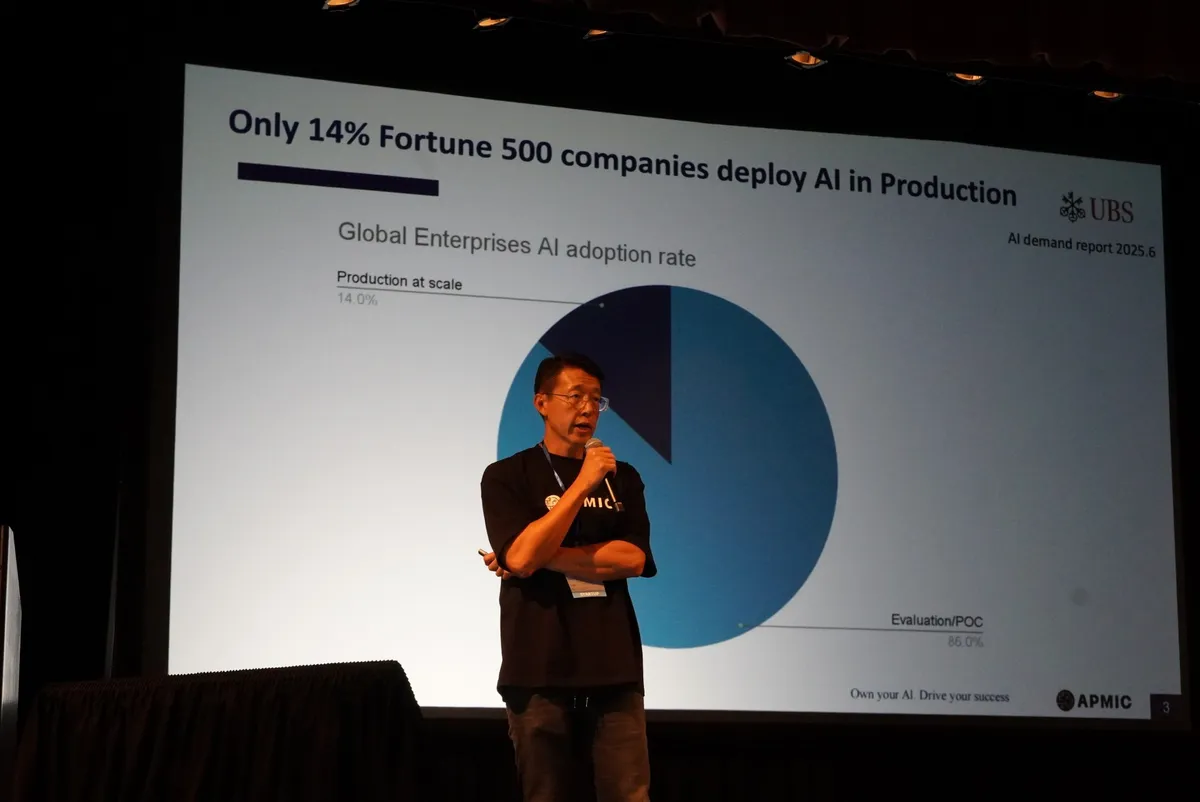
Ian Chen, General Manager of APMIC USA.Image Credits: Startup Island TAIWAN
Arklex AI was founded by Professor Zhou Yu of Columbia University’s NLP Lab and Arbit Chen, a veteran engineer formerly at HTC and Airbnb. The company is dedicated to helping businesses design, test, and validate AI agents before deployment. The team has observed that over 90% of enterprise AI projects fail after proof of concept (POC), mainly due to the unpredictability of real user behavior.
To address this, Arklex AI developed a "synthetic users" technology that simulates thousands of user personas and conversational scenarios. This approach enables highly realistic, automated testing that takes only minutes—compared to the days required for manual testing in the past. As a result, development cycles are shortened by 80%, and testing automation rates exceed 90%. The solution has already been adopted by clients such as Pearson, Walmart, and TD Bank, and Arklex AI collaborates with partners including Nvidia, AWS, and Salesforce.
Arklex AI has raised $2 million to date. Its revenue surpassed $1 million in Q2, with an annual growth rate of 600%. Looking ahead, the company aims to expand industry adoption, targeting $20 million in annual recurring revenue (ARR) as it strives to become the go-to solution for reliable enterprise AI deployment.
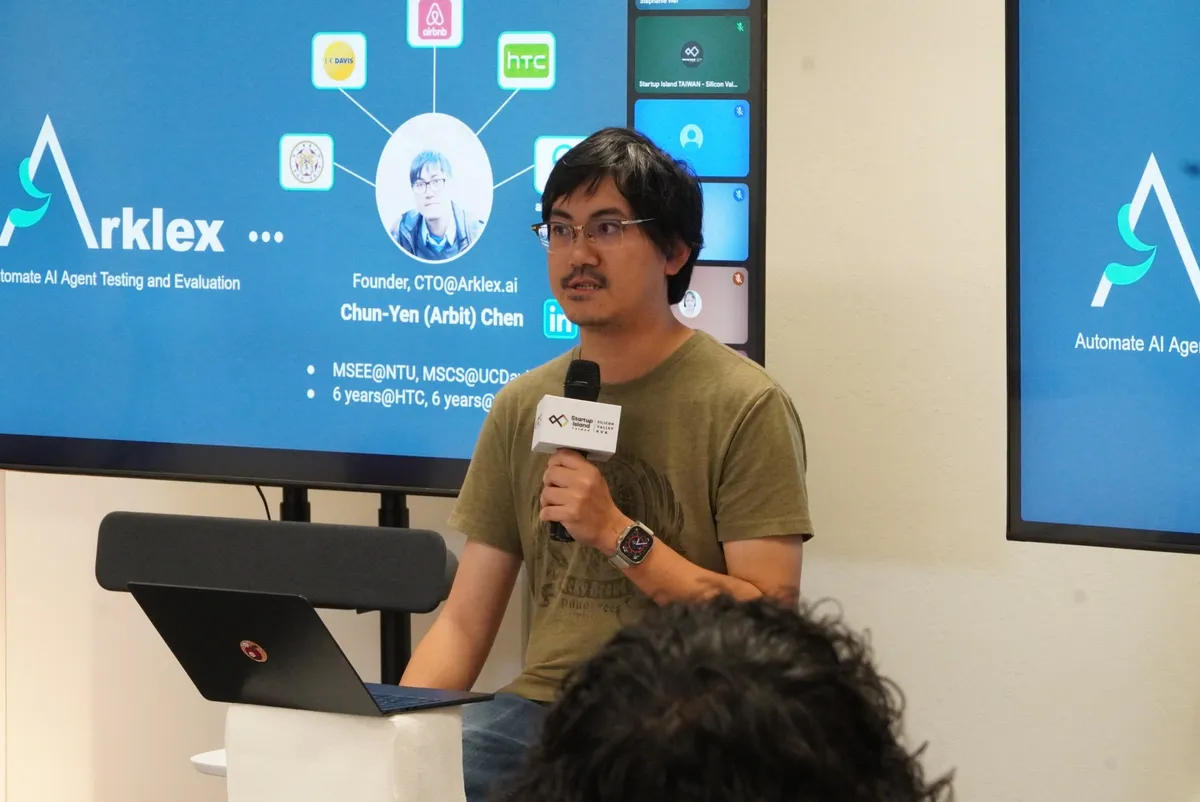
Arbit Chen, Co-founder of Arklex AI.Image Credits: Startup Island TAIWAN
Cadasu, co-founded by CEO Alex Mei, aims to become the go-to AI-powered CAD assistant for the manufacturing industry. The team has observed that engineering drawings are central to manufacturing processes, yet they are often hard to interpret, scattered across different systems, and make price comparisons challenging. This leads to lengthy quotation cycles and slow decision-making.
Cadasu’s system automatically parses 2D CAD drawings and converts them into structured data. Using AI, the platform can quickly match similar drawings, compare historical prices, perform cost analysis, and even assist with specification and version checks. This dramatically reduces the time required for supplier quotations and buyer reviews—from several days down to just a few hours. In addition, Cadasu can automate tasks like unit conversion and drawing translation, allowing engineers to focus on higher-value work.
Cadasu’s solution has already been adopted by customers in the TSMC and Applied Materials supply chains, with operations spanning Taiwan, Japan, Malaysia, and Singapore. The team plans to expand to 600 paying customers within a year and develop Cadasu into a core decision-making system for supply chains, helping enterprises boost efficiency and transparency.
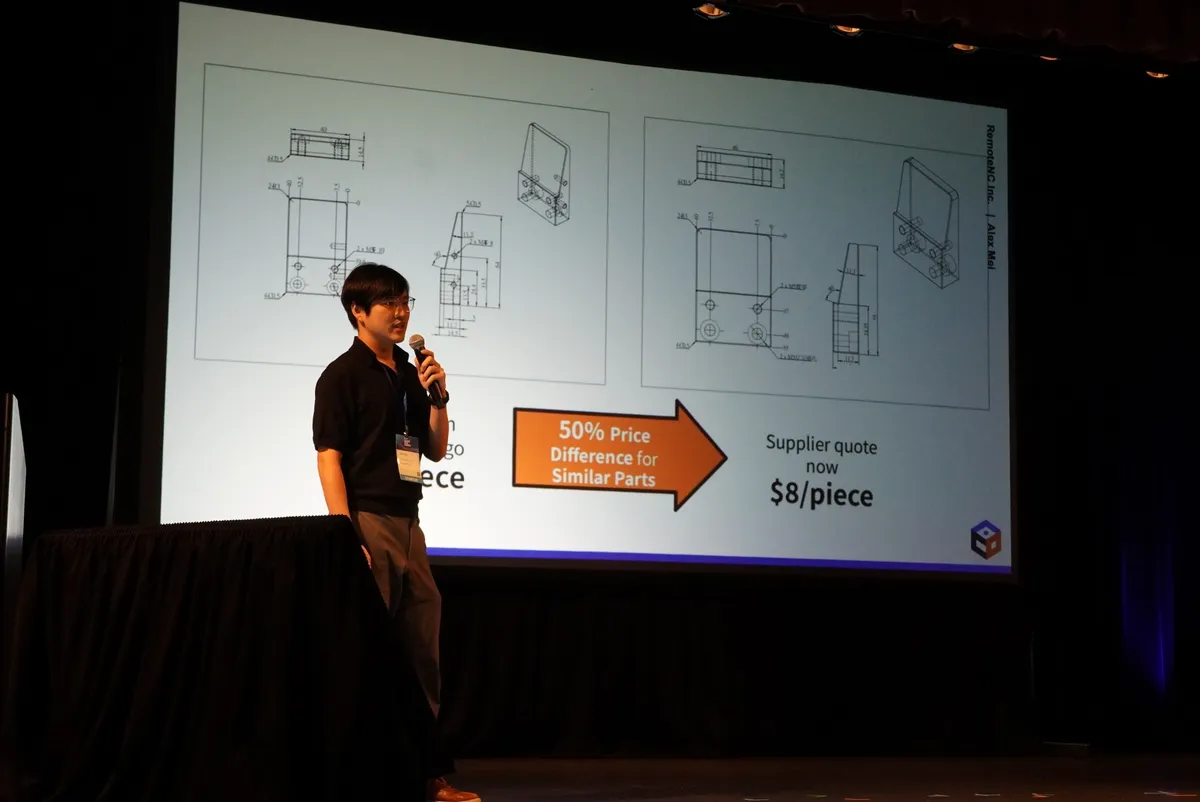
Alex Mei, CEO of Cadasu.Image Credits: Startup Island TAIWAN
Cosmicbrain AI was founded in San Francisco by Chi Chiu, with the mission of making robot learning accessible—no coding or technical expertise required. Chi is a serial entrepreneur who previously worked at Google, where he spent over 20 years and contributed to the company’s earliest robotics projects.
Currently, developing robotic skills remains highly specialized and costly, requiring complex programming, expert teams, and large datasets—barriers that put advanced robotics out of reach for most companies. Cosmicbrain AI’s solution allows businesses to simply upload a video of a human performing a task. The AI then converts that demonstration into an executable skill for robots, completing in just minutes what previously took months or even years of training.
The market potential for robotics is immense, with more than 40 million robots already deployed worldwide. As manufacturing returns to local markets and labor shortages intensify, the demand for rapid deployment of specialized skills is accelerating. Cosmicbrain AI’s business model includes a subscription-based platform, enterprise project solutions, and API-based services.
The company is currently exploring collaborations with partners in high-tech manufacturing, logistics, agriculture, and mining. Cosmicbrain AI is also actively seeking system integrators and OEM partners to help make “no-code robot skill learning” the new industry standard. The company is now raising a seed funding round, with the goal of ushering in a new era of intelligent robotics.
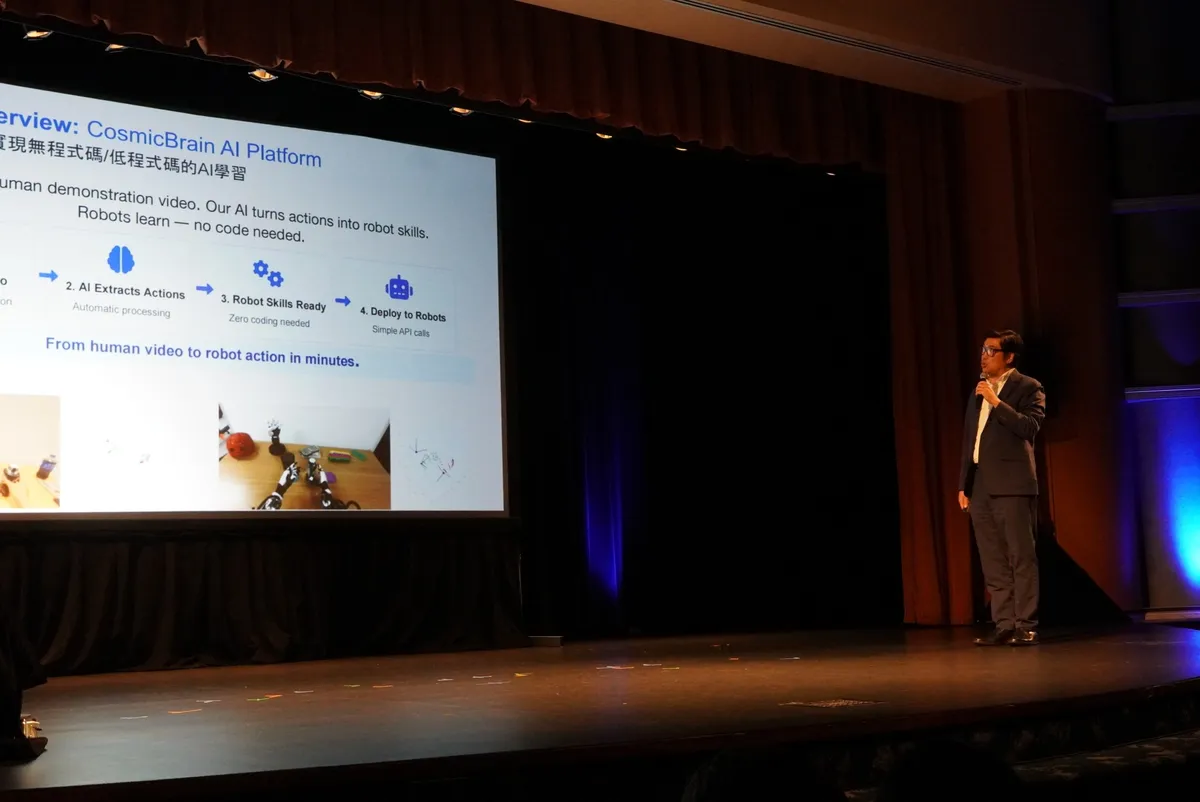
Chi Chiu, Founder of Cosmicbrain AI.Image Credits: Startup Island TAIWAN
Hera was co-founded by Chia-Lun Wu and positions itself as the world’s first “AI motion designer,” focused on tackling the high cost and time-consuming nature of animation production. Wu and the team noticed that, even though animation often makes up only 10% of a video, it can consume over 70% of the production time and budget. Traditional software like Adobe After Effects has a steep learning curve and price point, making it inaccessible for most content creators and marketing teams.
Hera’s solution is like “Figma for animation”: users simply enter text prompts to instantly generate professional-grade animations, then fine-tune details with intuitive drag-and-drop editing. This empowers creators and marketers with no design background to produce high-quality animations in just minutes—dramatically increasing viewer retention and engagement for their videos.
Since its official launch in July 2023, Hera has reached $25,000 in monthly revenue, growing at a rate of 25% per week, and has accumulated over 1,000 paying users. Clients include well-known companies such as HubSpot, Iris, and Lucid. Moving forward, Hera plans to expand from animation into a full-scale video creation platform, aiming to capture a share of the multi-billion dollar video software market.
Influenxio is building an AI-powered creator advertising network that systematizes and scales the use of long-tail and mid-tier influencers, helping brands execute influencer marketing with greater efficiency and lower costs.
Traditionally, brands spend weeks searching for the right influencers, incurring high costs with unclear ROI. On the other hand, most small and mid-sized creators lack steady income and professional monetization tools. Influenxio’s solution enables brands to simply submit a brief campaign description, and AI automatically matches them with suitable creators, generates personalized content, and streamlines publishing and performance tracking. For creators, the platform offers a one-click process to accept collaborations and earn revenue.
The platform’s core strength lies in its ability to capture each creator’s unique voice and style, making AI-generated content almost indistinguishable from the creator’s own work. This increases the authenticity of branded content while allowing creators to earn more without extra effort. Influenxio has already built a network of over 20,000 creators in Taiwan and, leveraging AI, has amassed a global database of 600,000 influencers, positioning the company for rapid international expansion.
Influenxio has successfully helped Taiwan’s largest travel company, ezTravel, halve its marketing costs and double its output. Next, the team plans to use Taiwan as its base to enter the US market, aiming to tap into the massive $13 billion influencer marketing opportunity and create a true win-win platform for brands and long-tail creators.
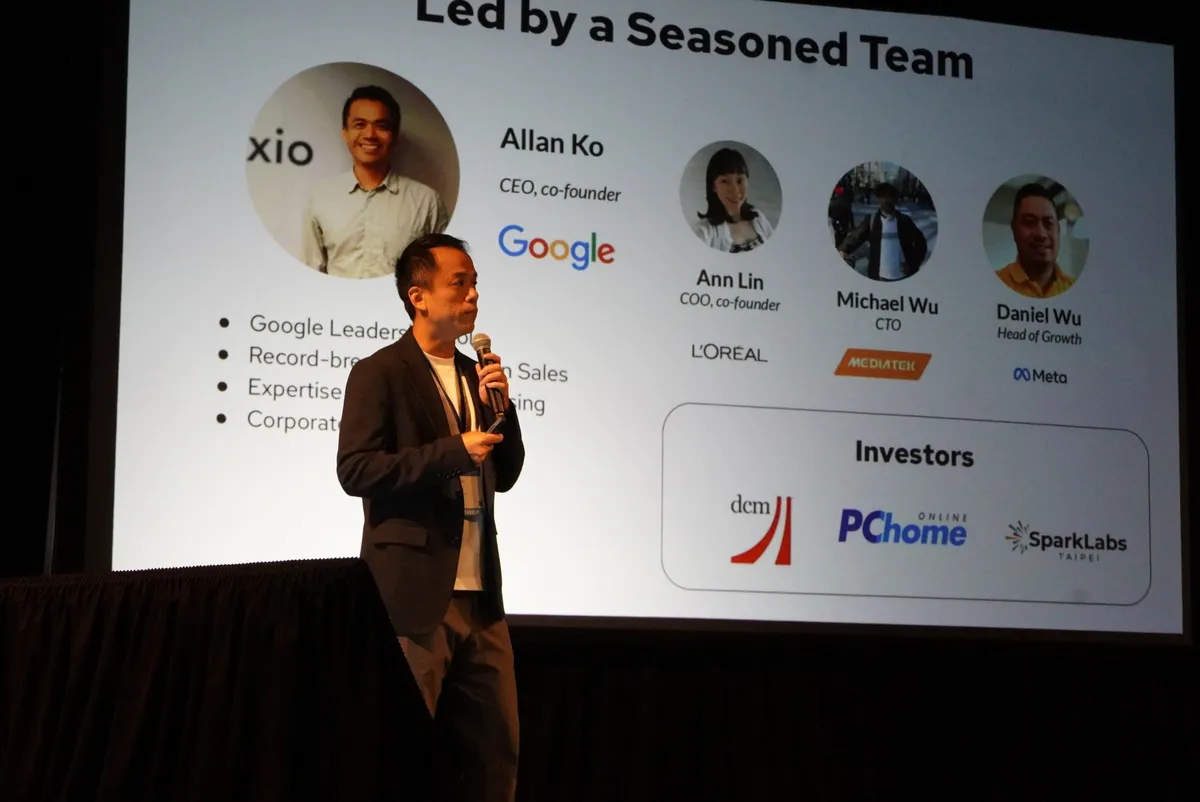
Allan Ko, Founder and CEO of Influenxio.Image Credits: Startup Island TAIWAN
Swift.ai was founded by CEO Angelo Huang with the goal of providing modern businesses with an all-in-one device and compliance management platform. Angelo previously founded and successfully exited LeadIQ, giving him firsthand insight into the challenges of fragmented, expensive, and hard-to-implement endpoint management and compliance tools. This experience led him to create a simple, AI-powered solution.
Swift.ai automates encryption, patching, application control, and real-time issue resolution—allowing companies to manage Mac, Windows, and Linux devices from a single platform and quickly meet compliance requirements such as SOC 2, ISO, and HIPAA. The platform also detects and controls the use of Shadow IT and AI agents, reducing the risk of data leaks and compliance violations.
The product is built as a self-serve SaaS platform, attracting mid-sized enterprise clients. Swift.ai not only helps startups quickly achieve SOC 2 certification but also assists mid-sized companies in filling compliance gaps not covered by existing solutions, with an average annual contract value of $25,000.
To date, the company has signed 60 customers and achieved $250,000 in annual recurring revenue, with plans to surpass $20 million ARR within two years. The team includes members from LeadIQ, as well as experts in device management and enterprise sales, and is backed by Y Combinator and several prominent startup advisors. Swift.ai’s mission is to become a leader in compliance and AI risk management—setting the new standard for device management in the AI era.
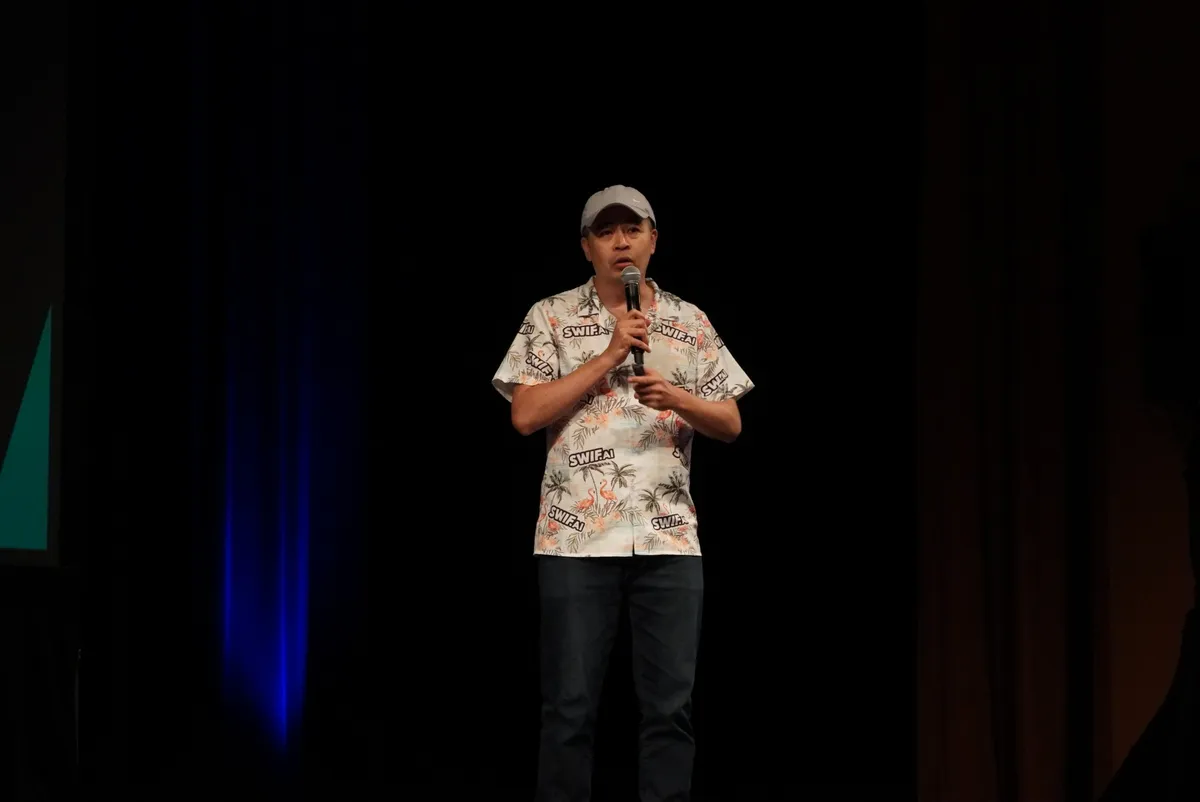
Angelo Huang, Founder and CEO of Swift.ai.Image Credits: Startup Island TAIWAN
Tenfold AI is tapping into the global $437 billion legal services market with its core product, LexGents—a platform designed specifically to streamline document review, drafting, and risk management for law firms and corporate legal teams handling M&A, venture capital, and large-scale transaction documents.
Traditionally, lawyers working on M&A deals can spend days or even weeks reviewing thousands of documents, painstakingly checking for potential risks and ensuring consistency across contracts drafted by multiple attorneys. This process not only consumes more than half of a law firm’s capacity but also leaves room for human error. LexGents by Tenfold AI offers three key features: its Knowledge Management Center (KMC) securely integrates proprietary data with the latest regulations and legal cases, and uses a "confidence framework" to automatically invite the right lawyer to step in when necessary, minimizing AI hallucinations. The collaborative drafting tool combines a law firm’s preferred writing style with up-to-date regulations to generate ready-to-use contract drafts. Meanwhile, the risk detection feature automatically scans documents for loopholes and provides revision suggestions, significantly increasing review efficiency.
In practice, LexGents has been shown to improve legal research efficiency by 20 times, speed up drafting by 30 times, and accelerate document review by 180 times, while reducing AI hallucination rates by 28%. This truly delivers on the promise of a trustworthy AI legal assistant.
Tenfold AI is already partnering with more than ten law firms and VC institutions, adding over 100 new users per month through its distribution channels. The company is rapidly expanding into Taiwan, Singapore, and the US, and plans to serve more than 20 international law firms by the end of 2025, aiming to become a leader in M&A legal technology.
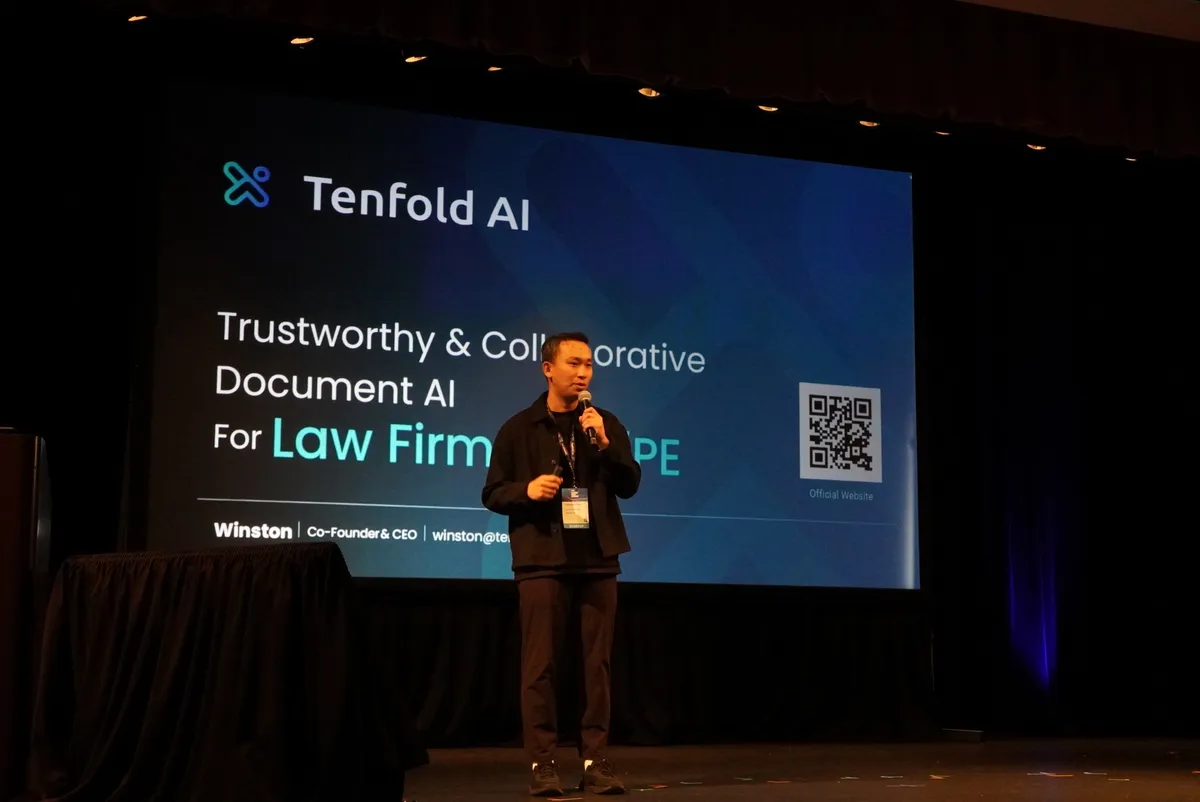
Winston Chen, Co-founder of Tenfold AI.Image Credits: Startup Island TAIWAN
Twin Counsel was co-founded by Y Combinator alumnus Josh Dorward, with a focus on building AI-powered legal workflows for small law firms.
In the legal industry, lawyers typically spend 70% of their time on non-billable administrative tasks—like document preparation, file tracking, and tedious reporting. Twin Counsel is designed to address this pain point. By integrating with the tools lawyers already use (such as email and document management systems), it consolidates scattered information into a smart workspace and provides a “daily action command center” that automatically generates AI-assisted drafts. Lawyers can delegate work to their dedicated AI legal assistant simply by sending an email.
Key product features include automated document generation and tracking, built-in audit trails, and source verification mechanisms to ensure transparency and reliability of outputs. In real-world use, Twin Counsel has helped California family law attorneys reduce financial disclosure preparation time from 90 minutes to just 9 minutes—a 90% increase in efficiency.
Twin Counsel’s business model combines a base SaaS fee per lawyer with case-based billing. As firms save more time, usage and value naturally increase. The platform is purpose-built for small law firms, with a focus on personalization, automation, and trust.
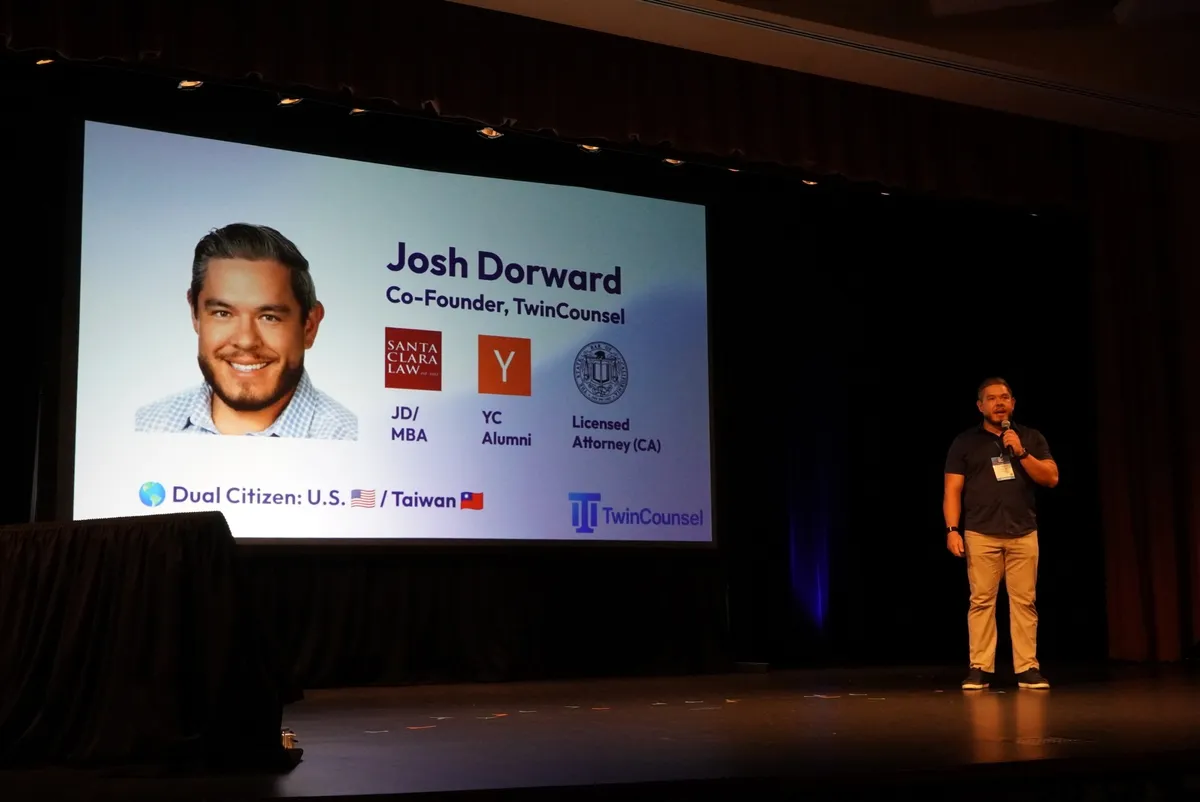
Josh Dorward, Co-founder of Twin Counsel.Image Credits: Startup Island TAIWAN

 Top
Top